How AI Influencer Marketing Works in 2025
Discover how artificial intelligence transforms influencer discovery, brand–creator matching, creative optimization, and ROI tracking. Learn the playbook for running scalable, data-driven campaigns — without wasting budget on the wrong creators.
Overview
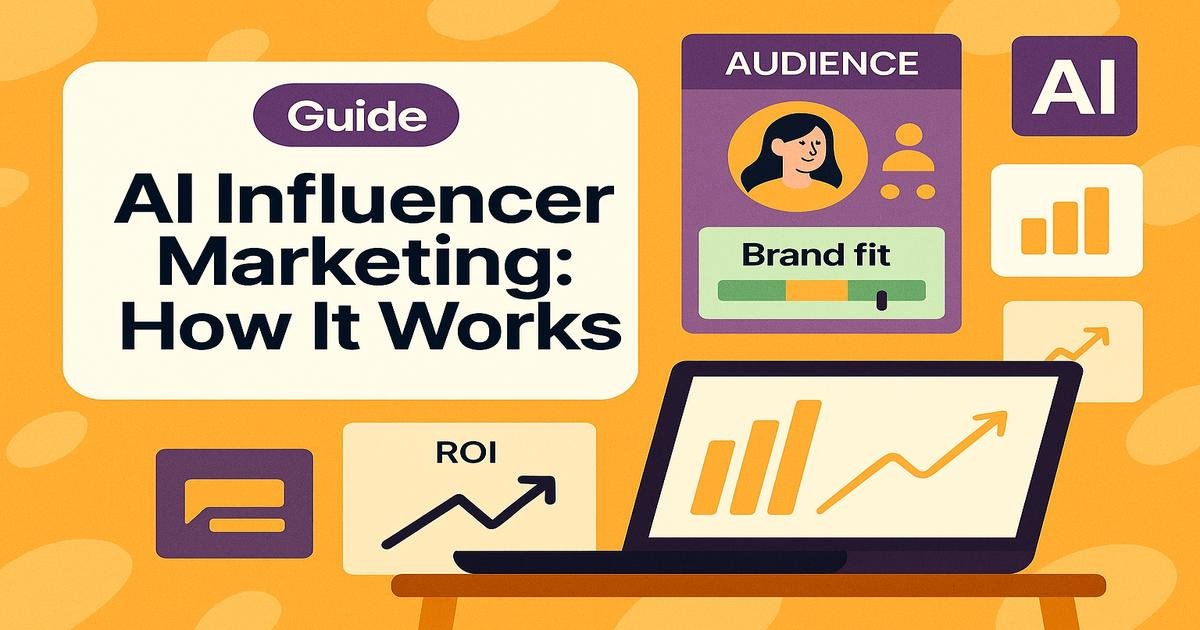
Influencer marketing used to rely on guesswork — follower counts, vibes, and a spreadsheet. In 2025, AI turns it into a data discipline: it analyzes audience authenticity, detects fake engagement, measures brand–audience overlap, and predicts which creators will deliver sales (not just likes).
- Faster discovery: Find niche creators that match your ICP (ideal customer profile).
- Quality filters: Spot real vs. botted audiences, audience geography, and purchase intent signals.
- Predictive ROI: Estimate results before you spend — CTR, CAC, ROAS, and earned media value.
- Automation: Briefs, contracts, UTM links, compliance, and reporting handled with fewer clicks.
AI Discovery Tools
A strong discovery engine scans millions of posts and profiles to surface creators who actually fit your brand. Prioritize tools that offer:
- Audience authenticity & quality: Bot/fraud detection, suspicious velocity spikes, follower–engagement ratio.
- Brand–audience alignment: Demographics, languages, geo, interests, and intent categories.
- Content fingerprinting: Past brand mentions, sentiment, format performance (Reels vs. Shorts vs. carousels).
- Lookalike creator search: Upload your top performer to find twins in adjacent niches.
- Cross-platform view: TikTok, Instagram, YouTube, X, LinkedIn — pick by objective, not platform hype.
Campaign Automation
Once you shortlist creators, AI can automate the heavy lifting so you ship more campaigns with fewer resources:
- Outreach & briefing: Personalized messages generated from creator’s style; smart briefs with examples.
- Offer calculators: Auto-calculate fair pricing from reach, EMV benchmarks, usage rights, and deliverables.
- Contract & usage: Standardized clauses for exclusivity, whitelisting, and ad-boost permissions.
- Tracking links: Auto-generate UTMs, discount codes, and platform-specific pixels.
- Content QA: AI checks disclosure (#ad), brand guidelines, and edits before posts go live.
- Whitelisting & Spark Ads: Approve creator posts to run as paid ads from the creator handle for extra scale.
Compliance tip: Ensure clear disclosures (#ad / paid partnership) and follow platform-specific branded content policies.
Measuring Results (What Actually Matters)
AI-grade reporting goes beyond vanity metrics. Track leading indicators and sales outcomes together:
- Engagement quality: Saves, shares, and comments — not just likes.
- Traffic & CTR: UTM clicks, session duration, and assisted conversions.
- Conversions: Code redemptions, signups, purchases, LTV cohorts.
- Cost metrics: CAC (customer acquisition cost), CPA (cost per action), ROAS (ad spend return).
- EMV: Earned media value relative to paid media benchmarks.
Benchmark Starting Point
- Engagement rate target: 2–6% (varies by platform and niche)
- Story CTR: 0.5–1.5% | Short-form video CTR: 1–3%
- Starter ROAS goal: 1.5–2.5x for test campaigns, 3x+ to scale
Trends
- UGC at scale: Brands commissioning creators for ads-first content (not just organic posts).
- Micro & nano creators: Smaller audiences, higher trust, better CAC in many niches.
- Creator licensing & whitelisting: Running paid ads from creator handles boosts social proof.
- AI-generated concepts: Concepting hooks, scripts, and creative briefs using AI.
- Conversion-first formats: Tutorials, before/after, product-in-use, and problem–solution reels.
- Brand–creator long-term deals: Ambassadorships replace one-off posts for compounding ROI.
FAQ: AI Influencer Marketing
How do I avoid fake followers?
Use tools that flag suspicious growth, analyze audience quality, and check comment authenticity. Always sample posts manually before approving.
What’s the safest way to track sales?
Combine UTMs, unique codes, post IDs, and platform pixels. Attribute both direct and assisted conversions in your analytics.
How much should I pay creators?
Price by deliverables + usage rights + predicted EMV. Start with tests, promote winners, and negotiate longer-term rates for scale.
Do I need paid ads?
Not required, but whitelisting top-performing creator posts often improves ROAS and extends reach to new audiences.
Key Takeaways
- Use AI to find aligned creators, not just big ones.
- Automate ops: briefs, contracts, tracking links, and QA.
- Measure beyond likes — optimize for CAC, ROAS, and LTV.
- Scale proven creators with long-term partnerships and whitelisting.
Next Steps
- Define your ICP and creative angles (tutorials, reviews, UGC).
- Shortlist 20 creators with strong audience–brand fit.
- Run small tests, promote winners, and lock in ambassadorships.
Editorial policy: No specific platforms are promoted without permission/affiliation. This guide focuses on features, workflows, and measurement frameworks you can apply with any reputable tool.
Pro Tip & Community
👉 Pro Tip: You don’t need to be an expert — you just need to be one step ahead of your clients. Learn, apply, and teach what works. 🚀
🔗 Join our Facebook community ❤️
and the StackTricks Hangout group 💬
to share progress and get mentorship.